Mickey Mouse’s Beloved Pet Dog

Hey there! Everyone’s favorite mouse has been around for nearly a century and his beloved pet dog, Pluto, has been with him for nearly as long.

In this article, we’ll take a look at the origins of Pluto, his relationship with Mickey Mouse, his unique personality traits, and his role in the Disney universe. We’ll also explore how his character has evolved over the years since his debut in 1930.

So if you’ve ever wanted to know more about Mickey Mouse’s most loyal companion, this is the article for you!

The Origins of Pluto

Everyone knows the iconic character of Meet Pluto, Mickey Mouse’s lovable pet dog and a beloved character in the Disney universe. Learn more about Pluto’s history and significance in Disney’s world., but have you ever wondered where he came from?

In the early days of animation, Walt Disney was inspired by a pet dog belonging to one of his friends. This dog was a black-and-white female named “Rover”. After observing Rover’s peculiar movements and behaviors, Disney was able to bring a new character to life that was based on Rover’s unique qualities. He named this character “Pluto” and debuted him in a cartoon short in 1930.

Pluto quickly became a hit with audiences, and Disney made him Mickey Mouse’s pet in a series of cartoons. Since then, Pluto has become one of the most beloved characters of the Disney family and continues to appear in numerous Disney cartoons and comics. He’s even been given his own star on the Hollywood Walk of Fame!

Though Pluto’s origins are humble, he has become an important part of the Disney kingdom.

Pluto’s Relationship with Mickey Mouse

Although Pluto was his constant companion, Mickey’s relationship with the pup was anything but ordinary. They shared a bond that was full of playful mischief, but also filled with genuine love.

Mickey often played pranks on Pluto and took advantage of his naivety, but he also looked out for him and showed him kindness. Pluto was always eager to please and was always willing to help Mickey out of a jam.

Together, they had a unique and special bond that was unrivaled by their peers. The two were inseparable and often embarked on wild adventures together. Mickey was always the leader and Pluto was always the loyal sidekick.

Whether they were dealing with a giant or a giant-sized mouse, Pluto was always there to help Mickey save the day. The pair rarely faced danger without the other and rarely had fun without the other.

Their friendship was one-of-a-kind and will live on as one of the most iconic relationships in animation history.

Pluto’s Personality Traits

You can’t help but love Pluto’s unique combination of innocence and loyalty, making him a truly endearing character. He is always depicted as a loyal, lovable pup that is endlessly devoted to Mickey Mouse, always willing to go the extra mile to show his love and affection.

His innocent nature is often demonstrated through his naivety, as he often gets himself into sticky situations due to his lack of understanding and insight. Despite this, he’s often able to solve any problem with his intelligence and courage.

He’s also an incredibly brave and loyal character, often coming to Mickey’s rescue in times of need. Pluto’s loyalty and innocence make him one of the most beloved characters in the history of Disney. From his adorable personality to his unwavering devotion to Mickey Mouse, Pluto is sure to make any fan smile.

Pluto’s Role in the Disney Universe

As a loyal companion to Mickey, you can always count on Pluto to go the extra mile to help out, no matter how tricky the situation may be. He has been a beloved pet of Mickey Mouse since his debut in 1930, making him one of the oldest characters in the Disney universe.

Over the years, Pluto has shown his loyalty and bravery in many Disney films and television shows. He has helped Mickey out of many sticky situations, and his loveable antics have made him an endearing and memorable character to children and adults alike. From saving Mickey from a pack of hungry wolves to going up against a giant robot, Pluto is always willing to lend a helping paw.

He has been at Mickey’s side for many adventures and his presence is often key to the success of the mission. He is also known for his mischievous behavior, making him a lovable character who is always up for a good time. Whether he is getting into trouble or helping Mickey out of a jam, Pluto always manages to find his way into our hearts.

The Evolution of Pluto’s Character

Through the decades, Pluto has grown from a loyal sidekick to a mischievous troublemaker, always ready to get into some kind of mischief or lend a helping paw.

In the early days of Pluto’s character, he was portrayed as a typical canine companion to Mickey Mouse, often providing comic relief and silly antics.

In later years, however, his role was expanded to become more of a comedic foil to Mickey, often getting into trouble and causing chaos.

Pluto has also become a more independent character, often taking center stage in his own stories and adventures. He’s often portrayed as an intelligent, street-smart dog who learns from his mistakes and is always looking out for the best interests of his master, Mickey.

Through the years, Pluto has become a beloved and iconic character, whose mischievous spirit and loyalty to Mickey have endeared him to audiences around the world.

Conclusion

You can’t talk about Mickey Mouse without mentioning his beloved pet dog, Pluto.

From his humble beginnings as a nameless bloodhound in a Mickey Mouse cartoon, to his current status as a beloved character in the Disney universe, Pluto has been a constant companion to Mickey.

His loyal, trusting, and goofy nature made him an endearing figure to generations of Disney fans. Even today, kids of all ages still recognize Pluto as an important part of Mickey’s world, and he will continue to be a part of the Disney family for years to come.

Pluto may not be able to talk, but his presence has been, and will continue to be, felt by millions of Disney fans worldwide.


Are Minnie Mouse And Mickey Mouse Dating? Find Out Now

Hey there, you’re probably wondering if Mickey and Minnie Mouse are dating. Well, you’re in luck! In this article, we’ll take a look at the origins of these two iconic characters, their matching outfits and sweet interactions, any signs of a romantic relationship, and come to a final verdict.

So keep reading if you want to find out if these two are meant for each other!

We all know that Mickey and Minnie Mouse have been around for decades, but did you know that they first appeared in 1928? That’s right, they’ve been around for almost a century! They were both created by Walt Disney, and they’ve been captivating audiences ever since.

So with all this history, let’s take a look at whether or not they’re actually dating.

The Origins of Mickey and Minnie

You may be wondering how these two popular characters came to be – let’s explore the origins of them!

Mickey Mouse first made his debut in 1928 in the animated short film ‘Steamboat Willie.’ His original design was created by Walt Disney and Ub Iwerks, and was inspired by a tame mouse that Disney had encountered in his office at Laugh-O-Gram studios.

As for Minnie Mouse, her debut was in the same film, and she was the female counterpart of Mickey. She was created by Disney and Iwerks as well, and was given a dress and shoes to make her more feminine.

Both characters became instant hits with the public and remain popular today.

Matching Outfits and Sweet Interactions

Numerous matching ensembles and endearing interactions suggest a close relationship between Mickey and Minnie Mouse. The two have been spotted in matching outfits and often display loving interactions with each other.

Mickey Mouse can always be seen with his classic red shorts and white gloves, while Minnie Mouse is often seen wearing a classic pink skirt with a white shirt and polka-dotted bow. Their matching outfits offer a strong visual cue to their relationship.

The two also share many sweet interactions. Minnie often showers Mickey with love, affection, and laughter. Similarly, Mickey is often seen helping Minnie in various tasks, such as carrying her bags and holding her hand.

These sweet and caring gestures demonstrate the strength of their bond. Fans of the two characters have noticed their interactions, leading to speculation that there is something more between them.

Signs of a Romantic Relationship

One can’t help but be charmed by the flirty glances and secret smiles that Mickey and Minnie share, hinting at a possible romantic relationship between them.

From their matching outfits to the intimate conversations they have, it’s become clear that there’s something special between them.

Some other signs of a romantic relationship include the way they blush when the other speaks and how they often seem to finish each other’s sentences.

They also have a tendency to laugh together and share meaningful looks, which indicates a deep bond between them.

It’s clear that Mickey and Minnie have a strong connection, and it’s possible that they are indeed in a romantic relationship.

Is It Just Platonic?

With their undeniable chemistry, it’s hard to tell if Mickey and Minnie’s relationship is just platonic–or something more.

Is it possible for a mouse and a mouse to have a romantic relationship? It’s hard to tell from the outside, but there are some signs that indicate it could be just a strong friendship.

For example, Mickey and Minnie have been around for decades and have stood the test of time. They are always together, but rarely show any physical affection towards each other. Plus, they never seem to have any romantic conversations.

Given these signs, it’s likely that Mickey and Minnie’s relationship is just platonic. Even if they are not romantically involved, the strong bond between them will last forever.

It’s a friendship that could never be replaced, no matter what. Even if they don’t have a romantic relationship, they are still a classic couple that will be remembered for years to come.

The Final Verdict

You can only speculate about the true nature of Mickey and Minnie’s relationship, but one thing is for sure – their strong bond is sure to last forever.

After almost a century of being together, it’s clear that Mickey and Minnie share a connection that goes beyond platonic. Whether they are in fact a couple or just lifelong best friends, the two of them are inseparable.

Whatever the true nature of their relationship, it’s clear that their relationship is one of the most famous in the world. With so much history between them, the two of them are an iconic couple who have touched the hearts of millions of people over the years.

Their love is timeless and sure to live on in the hearts of generations to come.

Conclusion

You’ve taken a deep dive into the relationship between Mickey and Minnie Mouse, and now it’s time for the verdict.

After looking at the evidence, it seems that Mickey and Minnie are definitely more than just friends.

While their relationship has never been explicitly addressed, their matching outfits and sweet interactions are a clear sign that they have a special bond.

So, it looks like these two are an item!

We hope you’ve enjoyed learning about the power couple that’s Mickey and Minnie Mouse.


Exploring The Role Of Pete In Mickey Mouse Clubhouse

You’ve probably heard of Pete and his role in the Mickey Mouse Clubhouse. He’s been around since the 1920s, and he’s been causing trouble ever since. However, despite his mischievous tendencies, he’s also loyal to Mickey and his friends.

He also serves an important role in comic relief, which has made him a fan favorite. Over the years, Pete’s character has grown and developed, and he’s become an important part of the show.

In this article, we’ll explore Pete’s role in the Mickey Mouse Clubhouse and the lasting impact he’s had on fans.

Pete as a Troublemaker

He’s always up to no good, causing chaos and wreaking havoc wherever he goes! Pete, the antagonist of Mickey Mouse Clubhouse, is a troublemaker who always has a plan up his sleeve. He’s constantly looking for ways to cause mischief, whether it be stealing the clubhouse key or attempting to take over the world. He’s not afraid to get his hands dirty, and he’s always up to something.

When Pete isn’t causing trouble, he’s trying to be helpful. Despite his mischievous behavior, he can be a good friend, and he often aids Mickey and his friends in solving their problems.

He’s not all bad, and he can be surprisingly generous. He may have a penchant for chaos, but Pete has a heart of gold.

Pete’s Loyalty to Mickey and Friends

Despite being a bit of a troublemaker, he’s always been fiercely loyal to his pals! Even when Pete finds himself in a bind, he always seeks out Mickey and his pals for help. He knows that they will be there for him and ready to lend a hand in any situation.

Despite his devious plans to outsmart Mickey and the gang, Pete’s loyalty to his pals is unwavering. He would never turn his back on them and always stands by their side. Even in the face of danger, Pete is always willing to risk his own safety to make sure that his friends are safe.

He’s been known to put himself in harm’s way in order to save Mickey and the gang from danger. In short, Pete is an incredibly loyal friend and would do anything for his pals.

Pete’s Role in Comic Relief

You can’t help but chuckle at Pete’s antics as he adds a bit of comic relief to the Mickey Mouse Clubhouse. Whether he’s trying to get his hands on the fabulous Mousekatool or causing mayhem at Minnie’s Bow-tique, Pete is always there to add a bit of humor to the show.

The audience loves to watch as Pete attempts to outwit the other characters, only to end up foiled in the end. His mischievous behavior is often the source of much of the show’s comedy, and his jiggly dance moves never fail to amuse.

But Pete isn’t just an entertaining character. He also serves as a foil for Mickey and the gang, providing a contrast to the other characters. His role in the show is to be the antagonist, helping Mickey and the others to learn lessons and grow as characters.

He often serves as a cautionary tale, demonstrating how not to act and behave, allowing Mickey and the gang to see what not to do in certain situations. By showing the ‘wrong way’ to do things, Pete helps to highlight the importance of the lessons being taught in the show.

Pete’s Lasting Impact on Fans

Pete has left a lasting impression on viewers, with his mischievous behavior and jiggly dance moves providing endless entertainment and laughs.

He is an iconic character in the Mickey Mouse Clubhouse and is still remembered by many fans today. His role as the anti-hero of the show made him a fan-favorite, as viewers rooted for him to get away with his antics, even when they sometimes caused trouble.

His iconic laugh and big heart made him a lovable character, and his dance moves were often imitated by fans. Pete was a source of laughter and joy for many viewers, and his legacy will live on for years to come.

Pete’s Character Development Over Time

As you follow along with Pete’s journey, you can’t help but be amazed at the transformation he goes through, from a mischievous anti-hero to a lovable character with a big heart.

Throughout the years, Pete has gone from wanting to outsmart Mickey Mouse and the Clubhouse gang to working alongside them in order to help others. In the early episodes, Pete was a menacing figure, always trying to disrupt the fun and get ahead.

As time went on, however, he began to soften up and has become an important part of the Mickey Mouse Clubhouse gang. Pete’s character development has been a gradual process, with subtle nuances that have allowed him to become a more well-rounded character.

While he still has his moments of mischief and scheming, his motives are now mostly good-natured, and he often shows concern for those around him. He has also become a supportive friend to Mickey, often providing helpful advice and suggestions when needed.

Pete has truly come a long way in his character development, and his growth is a testament to the show’s creators and writers.

Conclusion

You’ve seen it all when it comes to Pete’s antics. Whether he’s causing trouble, acting as a loyal sidekick, or providing comic relief, he’s been an integral part of the Mickey Mouse Clubhouse for years.

He’s made an everlasting impression on the show’s fans, and his character has grown and changed over time.

Pete will always be remembered as a lovable troublemaker who always finds his way back to the hearts of Mickey and his friends.

His presence will be sorely missed, but his spirit will live on forever.


Does Mickey Mouse Have A Tail? Get The Answer Here

Hey there! Have you ever wondered if Mickey Mouse has a tail? The answer may surprise you!

It turns out that the answer depends on which version of Mickey Mouse you’re referring to.

In this article, we’ll be exploring the history and evolution of the iconic cartoon mouse, and taking a look at the tail of the Mickey Mouse costume.

So don’t go anywhere, and let’s dive right in!

The History of Mickey Mouse

You may be wondering about the origins of the iconic character, so let’s take a look back at the history of this beloved figure.

Mickey Mouse first made his debut in the 1928 film, Steamboat Willie. He was created by Walt Disney and Ub Iwerks and was voiced by Walt himself.

Mickey Mouse has since become one of the most recognizable characters in the world, featured in numerous films and cartoons. In the early years of animations, Mickey was often seen with a tail, but it was eventually removed as the character evolved over time.

He has since become an icon of the Disney brand and remains one of the most beloved characters of all time.

The Evolution of Mickey’s Character Design

Ah, the evolution of Mickey’s character design – it’s a wonderful journey filled with nostalgia!

From his introduction in 1928 as a black and white Steamboat Willie cartoon, Mickey has evolved and changed tremendously over the years. His original look featured small eyes and large round ears, a simple outfit, and no tail. The iconic red shorts and white gloves weren’t added until 1929.

Over the years, Mickey’s face has been updated to make him more expressive and sympathetic. His eyes have grown larger and more detailed, and his ears have become more proportional and natural. In recent years, Disney has focused on making Mickey look more realistic and modern.

The changes haven’t drastically altered his overall look, but they have given him a more contemporary feel. His clothing is often more detailed, and he now has a tail, which was added in 2020. Mickey’s look has changed with the times and will continue to evolve as time goes on.

He’s an ever-evolving character, and his design is a testament to the power of nostalgia.

The Tail of the Mickey Mouse Costume

You’re probably wondering if Mickey has a tail, and the answer is yes! His iconic tail was added in 2020, adding a bit of flair to the beloved character’s costume.

Mickey’s tail was first seen in the cartoon ‘The Barn Dance’ and has been part of his costume ever since. His tail has been made from different materials throughout the years, from felt to wire and plastic. The tail’s design has also changed, but it always gives Mickey a unique look that sets him apart from other cartoon characters.

The tail is usually black or red in color, and usually has a white tip. It’s an important part of the costume and a beloved part of the classic character.

The Meaning Behind the Tail

The tail of Mickey Mouse is more than just a piece of his costume – it’s a symbol of his unique character and identity!

It’s been a part of Mickey for over 90 years, and it’s become an iconic part of his image.

The tail is a sign of Mickey’s mischievous nature, embodying his cheeky, playful attitude.

It also serves as a reminder of his lovable, carefree spirit and his sense of adventure.

Mickey’s tail is a symbol of his loyalty and courage, too, and as such, it holds a special meaning for many of his fans.

It’s become a beloved part of Mickey’s character and identity, and it’s no wonder why it’s been a part of him for so long.

The Future of Mickey Mouse

As Mickey Mouse embarks on a new journey, it’s an exciting time to wonder what the future holds for this beloved character. Despite the fact that Mickey has been around for almost a century, he’s managed to remain relevant and lovable.

Though his look and style have changed over the years, his core values and character remain the same. In the coming years, it’s likely that Mickey will continue to evolve with the times, but his classic features, such as his tail, will remain.

As the world around him changes, Mickey will continue to stay true to his roots and bring joy to generations of fans.

Conclusion

You now know all about Mickey Mouse’s tail. He didn’t always have one, but it’s become a big part of his character design.

His tail represents his mischievous, adventurous spirit, and it’s become an iconic part of his look.

Looking to the future, it looks like Mickey Mouse’s tail isn’t going anywhere anytime soon. We can expect to see Mickey in all his tail-wagging glory, as he continues to bring laughter and joy to children and adults alike.


Discover The Animal Character Of Pete In Mickey Mouse Clubhouse

Hey there! Have you ever watched Mickey Mouse Clubhouse? Have you noticed the sneaky, sly character Pete? He’s one of the most beloved characters in the show.

In this article, we’ll explore the animal character of Pete. We’ll look at Pete’s physical characteristics, his mischievous nature, and his helpful side. Plus, we’ll examine Pete’s role in the show, and what makes him so special.

So come along and let’s discover the animal character of Pete in Mickey Mouse Clubhouse!

Physical Characteristics of Pete

You’ll notice that Pete is quite a large figure, with a wide and stocky body. He’s usually depicted wearing a red shirt, yellow pants, and a black hat, with a matching mustache.

His facial expression is often grumpy, and he’s usually portrayed as a strong and powerful figure. He also has cartoonishly large hands, which he often uses to intimidate other characters. His large size and strength make him an intimidating character in the show, and he often uses them to get his way.

He also often speaks in a gruff voice that can be heard from far away. All of these physical characteristics add to Pete’s animal-like personality, making him a memorable character in the Mickey Mouse Clubhouse.

Pete’s Mischievous Nature

His mischievous nature has caused trouble for all of us, hasn’t it?

Pete is one of the main characters in Mickey Mouse Clubhouse, and his mischievous nature is one of the things that makes him so lovable. He’s always up to some kind of trouble, and he rarely takes no for an answer.

From trying to steal all the cheese to starting a feud with the Beagle Boys, Pete is always looking for ways to stir up trouble.

The other characters in the show have to be quick on their feet to keep up with Pete. Even when Pete’s up to no good, you can’t help but laugh at his antics.

His personality and charm make him a fan favorite, and his mischievous nature is part of what makes Mickey Mouse Clubhouse so much fun.

Pete is an unforgettable character, and his mischievous nature is a big part of why people love him.

Pete’s Loyal and Helpful Side

Despite his mischievous ways, Pete’s incredibly loyal and helpful when it comes to those he cares about.

Whenever his friends are in trouble, Pete’s the first one to come to their aid. He’s willing to go above and beyond to help them out of any jam.

He’s often seen as a comical character, but his true colors come out when his friends are in danger.

In addition, Pete’s always willing to lend a helping hand when Mickey and the gang need help with a project.

Whether it’s building a clubhouse or fixing the steamboat, Pete’s the first one to lend a hand. Though he may not always follow the rules, his intentions are always good.

He just wants to help out his friends and make sure that everyone’s safe and happy.

Pete’s Role in Mickey Mouse Clubhouse

No matter the situation, Pete always has a role to play in the adventures of the Mickey Mouse Clubhouse, consistently demonstrating his helpful and loyal nature. He’s often seen working with Mickey and his friends to solve their various problems, and he’s often the one to come up with a creative solution.

Pete is also a loyal friend to Mickey, always willing to help him and his friends out of a sticky situation. He’s often the one to come to their rescue in times of need, and even puts his own needs and desires aside to help out. Pete is an important part of the Mickey Mouse Clubhouse, and his loyalty and helpfulness are always on display.

In addition to his helpful and loyal nature, Pete is also an important source of comic relief in the Mickey Mouse Clubhouse. He often provides lighthearted moments, providing a much needed break from the action. His wild and zany antics often provide a great source of entertainment, and his larger than life personality is always a welcome addition to the show.

Pete’s role in the Mickey Mouse Clubhouse is an important one, and his character is beloved by fans of the show.

What Makes Pete Special?

You’ll find that Pete’s unique and endearing qualities make him a special part of the show.

Pete is the only villainous character in Mickey Mouse Clubhouse, and he provides an interesting dynamic to the show.

He’s a stubborn, selfish, and mischievous character that always tries to outsmart Mickey and his friends, but ultimately fails in his attempts.

Pete is always trying to find ways to get what he wants, even if it means being a bit deceitful.

However, despite his mischievous nature, he’s also a lovable character and often helps Mickey and his friends when they’re in a pinch.

His mischievousness is often a source of comic relief, and his heart of gold often shines through in the end.

All of these qualities make Pete a special character that adds an interesting twist to the show.

Conclusion

You’ve seen Pete’s physical characteristics and his mischievous nature, but also his loyal and helpful side.

He’s a beloved character on the Mickey Mouse Clubhouse, and it’s easy to see why.

Pete is a true representation of the unpredictable and complex nature of animals in real life, which makes him a relatable and endearing character.

He can be naughty and mischievous, but he always shows loyalty and helpfulness to Mickey and his friends.

Pete is truly a one-of-a-kind character, an animal character that will always be remembered and loved in the Mickey Mouse Clubhouse.


Piercing for Anxiety: Exploring the Potential Benefits and Considerations

Anxiety is a common mental health condition that affects millions of people worldwide. While there are various treatments and coping strategies available, some individuals are turning to alternative approaches to manage their anxiety. One such method gaining popularity is the use of piercings, specifically ear piercings, to alleviate anxiety symptoms. In this article, we will delve into the concept of piercing for anxiety, exploring the potential benefits and considerations associated with this practice.

The Connection Between Piercing and Anxiety

The idea behind using piercings as a means to ease anxiety lies in the concept of acupressure and auriculotherapy. Auriculotherapy, also known as ear acupuncture, is an alternative medicine practice that involves stimulating specific points on the ear to promote overall well-being and address various health concerns, including anxiety. The ear is believed to contain numerous pressure points connected to different parts of the body and emotions.

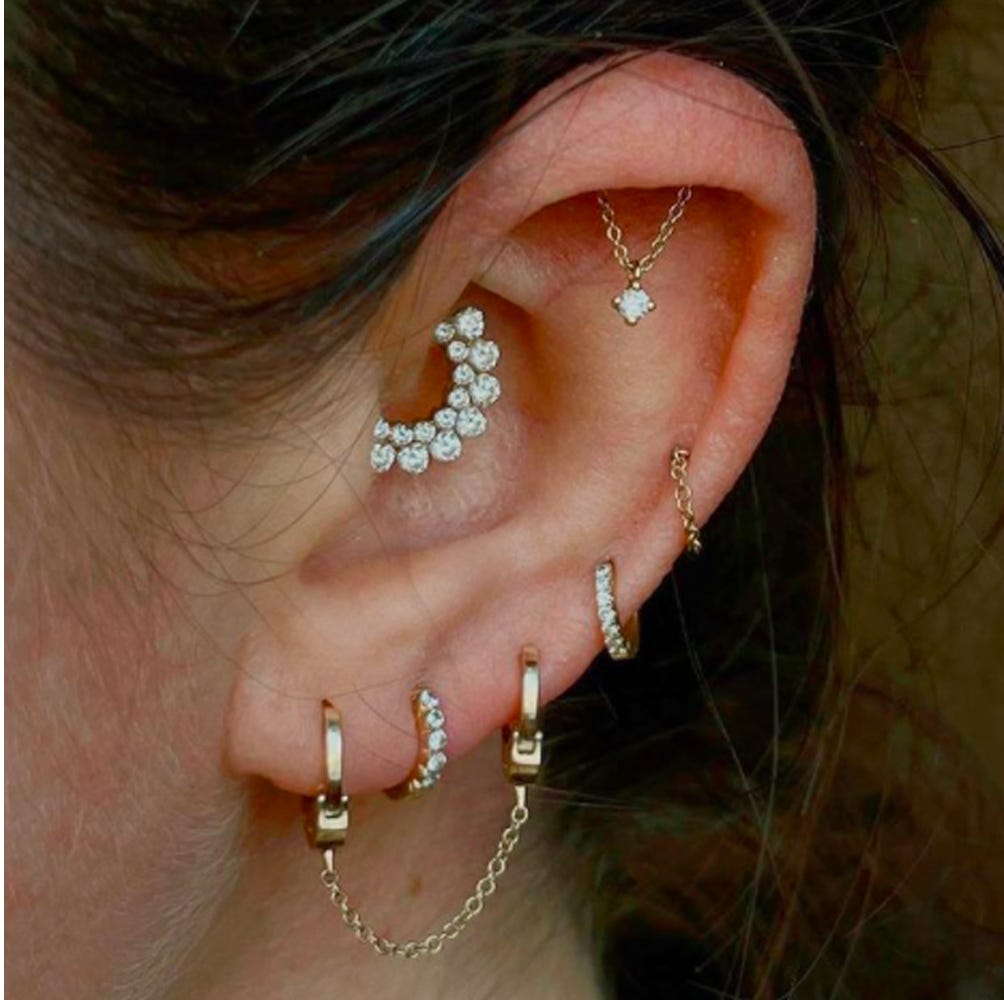
Daith Piercing: 24 Daith Piercing Ideas That Could Help Your Migraine

Potential Benefits of Ear Piercings for Anxiety

Advocates of ear piercings for anxiety claim that certain pressure points on the ear, when stimulated through piercing, may help alleviate anxiety symptoms. The potential benefits attributed to this practice include:

Calming Effect: It is believed that piercing specific pressure points can activate the body’s natural calming response, leading to a sense of relaxation.

Stress Reduction: By targeting anxiety-related pressure points, the piercing may help reduce stress levels and promote a sense of well-being.

Non-Invasive Approach: Unlike medications or traditional therapies, ear piercings are non-invasive and do not involve the use of drugs.

Self-Expression: Some individuals find the act of getting a piercing empowering and a form of self-expression, which can positively impact their emotional state.

Types of Piercings Used for Anxiety

The most commonly used ear piercings for anxiety are:

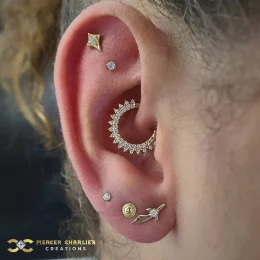
Daith Piercing: This involves piercing the innermost cartilage fold of the ear. Some believe that this spot corresponds to pressure points associated with anxiety and stress.

Tragus Piercing: The tragus is the small pointed cartilage in front of the ear canal. Stimulating this area through piercing is thought to have calming effects.

Considerations and Precautions

While some individuals may report positive experiences with ear piercings for anxiety, it’s essential to approach this practice with caution:

Limited Scientific Evidence: The evidence supporting the effectiveness of ear piercings for anxiety is mostly anecdotal, and more research is needed to establish its efficacy.

Individual Variations: Responses to ear piercings may vary among individuals, and what works for one person may not have the same effect on another.

Professional Piercing: If considering ear piercings for anxiety, it’s crucial to choose a reputable and professional piercing studio to minimize the risk of complications.

Other Anxiety Management: Ear piercings should not be considered a standalone treatment for anxiety. It’s essential to continue working with healthcare professionals and exploring other anxiety management techniques.

Conclusion

Piercing for anxiety is an alternative approach that some individuals find beneficial in managing their anxiety symptoms. While there are reported benefits, it’s essential to approach this practice with realistic expectations and understand that individual responses may vary. If considering ear piercings for anxiety, it’s best to consult with a healthcare professional and a professional piercer to make an informed decision. Ultimately, addressing anxiety comprehensively may involve a combination of approaches, including therapy, lifestyle changes, and support from healthcare providers.


Renovation Resurgence: Modernizing Homes for 21st Century Living

In a rapidly evolving world, our living spaces must keep up with the demands of the 21st century. Homeowners are increasingly seeking ways to modernize their residences, making them more functional, efficient, and aesthetically pleasing. The renovation industry is experiencing a resurgence as people recognize the importance of updating their homes to align with contemporary lifestyles. Experience the renovation resurgence as homes are modernized to cater to 21st century living, transforming the ordinary into extraordinary dream home makeover. This article delves into the various aspects of renovating homes for the modern era, exploring design trends, sustainability, smart technology integration, and budget-friendly approaches.

Renovation and remodeling have become essential aspects of modernizing homes for 21st-century living, ensuring they meet the demands of contemporary lifestyles and technological advancements. As a result, homeowners are seeking renovation solutions that align with their modern needs and preferences. Renovating homes has become more than just a cosmetic upgrade; it’s about enhancing functionality and comfort. 

Embracing Minimalism and Open Spaces

One of the defining features of modern design is minimalism. The trend of open spaces and clutter-free environments has gained traction as homeowners seek to create a sense of airiness and simplicity. Knocking down walls to merge living, dining, and kitchen areas has become a popular approach, fostering better flow and connectivity.

Important Features for Home Renovation - Woman's era

Incorporating Sustainable Materials

Sustainability is at the forefront of modern renovation. Homeowners are opting for eco-friendly materials that reduce their carbon footprint. Materials like reclaimed wood, recycled glass, and energy-efficient insulation not only benefit the environment but also contribute to healthier indoor living spaces.

The Rise of Smart Homes

The integration of smart technology has revolutionized how we interact with our homes. From voice-controlled assistants to automated lighting and security systems, smart homes offer convenience, energy efficiency, and enhanced security. The modern renovation project often includes the installation of these cutting-edge technologies.

Revamping Kitchens and Bathrooms

Kitchens and bathrooms are focal points of any home. Modern renovations in these areas focus on sleek designs, innovative storage solutions, and high-tech appliances. Smart faucets, touchless appliances, and minimalistic fixtures are becoming staples in these spaces.

Adapting Homes for Remote Work

The concept of remote work has reshaped how we view our homes. As more individuals work from home, renovating spaces to create functional home offices has gained importance. Converting nooks, corners, or underutilized rooms into productive workspaces is a common renovation trend.

Lighting and Energy Efficiency

Ample and well-designed lighting can transform a space. Modern renovations emphasize natural lighting and energy-efficient LED fixtures. Skylights, large windows, and innovative lighting controls contribute to both aesthetic appeal and energy savings.

Creating Multifunctional Areas

Modern homes need to adapt to various activities. Renovations often involve creating multifunctional spaces that can serve as a home office, gym, entertainment area, or guest room. Foldable furniture and convertible layouts are key elements in achieving this flexibility.

Budget-Friendly Renovation Strategies

Renovations need not break the bank. Homeowners are exploring cost-effective ways to modernize their homes, such as repurposing existing furniture, DIY projects, and focusing on high-impact areas like the entryway or focal walls.

The Role of Professional Designers

While DIY renovations are on the rise, professional designers bring valuable expertise to the table. They understand the nuances of modern design trends, space optimization, and functional layouts, ensuring a successful and aesthetically pleasing renovation.

Preserving Historical Charm

For homeowners with historic properties, modernization can be a delicate balance between preservation and renovation. Blending modern amenities with the charm of the past requires thoughtful design that respects the home’s unique character.

Enhancing Curb Appeal

Modernizing a home’s exterior is just as important as its interior. Renovations may involve updating siding, landscaping, and entryways to create a visually appealing and cohesive look that reflects contemporary design sensibilities.

Renovation ROI: Adding Property Value

Investing in renovation can yield substantial returns, particularly when it comes to property value. Well-planned renovations that address modern needs can significantly enhance the resale value of a home.

Overcoming Common Renovation Challenges

No renovation is without its challenges. Delays, budget overruns, and unexpected issues can arise. Proper planning, realistic expectations, and open communication with contractors are essential to overcoming these hurdles.

Conclusion

In the dynamic landscape of the 21st century, our homes need to evolve alongside us. Modernizing homes through thoughtful renovations not only enhances our living spaces but also aligns them with our contemporary lifestyles. Whether it’s embracing minimalism, integrating smart technology, or preserving historical charm, the resurgence in home renovations empowers homeowners to create spaces that truly resonate with the modern era.